

The airplane test: deriving passwords with zero network
Offline mode isn't a fallback bolted on later, it's proof the model works. Here's how MoolKey gives you the same password at 35,000 feet as at your desk.
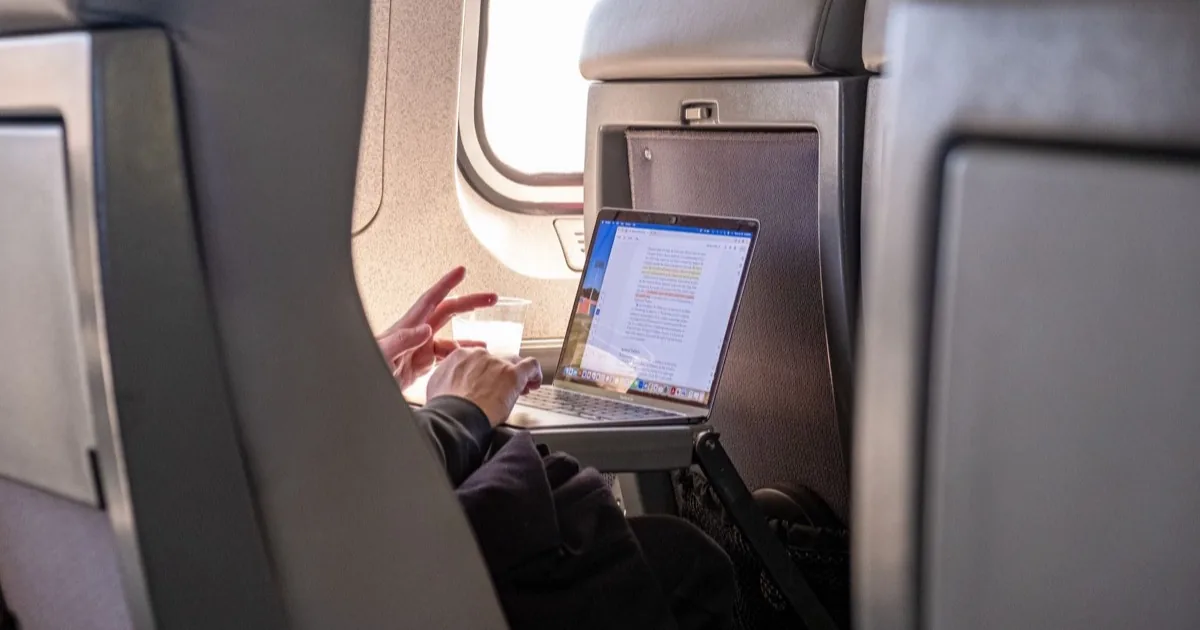
Here is a small test that tells you a lot about a password manager: turn off your Wi-Fi, board a plane, and try to log in to something.
With most tools, you are relying on a cached copy of your vault and hoping it synced recently. With MoolKey, the network is not required for the derivation itself.
Why offline is the proof, not the feature
Because MoolKey recomputes passwords instead of fetching them, there is no meaningful difference between online and offline. The inputs are the site, your identifier, a version number, and your master key. None of those require a server. The derivation runs in your browser via the Web Crypto API.
So “offline mode” is not a degraded experience we tacked on. It is the same code path, minus a network request that was never load-bearing. If MoolKey works on a plane, it is because the model is sound everywhere.
Install it as a PWA
The easiest way to be ready is to install the web app as a Progressive Web App:
- Open the MoolKey web app in your browser.
- Choose Install (or Add to Home Screen on mobile).
- Launch it like any native app: it now works without a connection.
Once installed, the app shell is cached locally. Open it in airplane mode, type your master key, and derive away.
A quick mental model
Think of it like long division. You do not store the answer to 847 ÷ 7; you recompute it whenever you need it, and you get the same answer every time, anywhere, with no lookup table.
Inputs you know  ──►  the same math  ──►  the same password
   (no server, no sync, no cache of secrets required)
Your master key is the one thing you bring. Everything else is arithmetic.
What still needs a connection
To be precise about it, a few non-secret conveniences do talk to the server when you are online:
- Saving the metadata for a new account (its masked identifier and version), so the app can remind you it exists.
- Syncing that list of account names across devices.
None of that is required to derive a password you have set up before, and none of it is a secret. Forget the list entirely and you can still recompute any password by typing the same inputs by hand.
Try the airplane test
You do not need a plane. Open MoolKey, derive a password for a site, note it, then switch your device to airplane mode and derive it again. Same string, every time.
That little experiment captures the model: the generated credential is recalculated in the browser, while online mode still uses non-secret account metadata when you want the app to remember your settings.
Keep reading
How do password managers work?
How password managers save, fill, and encrypt logins, and why some managers derive passwords instead of storing them.
 Guides
How to share passwords with your partner safely
Sharing a Netflix login is not the same as sharing your email. A practical guide to which passwords to share, how to share them, and what to keep separate.